
Task: Within both our photographic practice and our lives outside, we are asked to reflect on how others have shaped our photographic practice. What do we think about drawing on the ideas of others and their work and where do we draw the line between collaboration and plagiarism?
In discussing how my creative practice has been influenced by others, I think it is important to first clarify what we mean by the input of others. In my own case, I have tended to follow the path of the solo photographer, rather than collaborate directly on projects or when shooting on location or post-processing my images. As I explained in this week’s reflection blog, I have also tended to follow this approach in my work life.
However, with regard to inspiration, I am a firm believer in the importance of widely reviewing the work of others. By that I do not mean simply looking to replicate shooting styles, and approaches. Rather, I refer to a detailed study of selected favourite masters in order to understand their philosophy, creative journey and techniques. In doing so, I have been able to learn to push myself outside of my comfort zone, attempt new and difficult techniques and approaches to image-making, and set myself challenging future projects. In truth, I believe that it is impossible to simply take on the guise of previous masters. One simply becomes a poor imitation. However, by attempting to learn from their ideas and approaches one tends to fail, but by doing so grows the potential scope and expertise of their output.
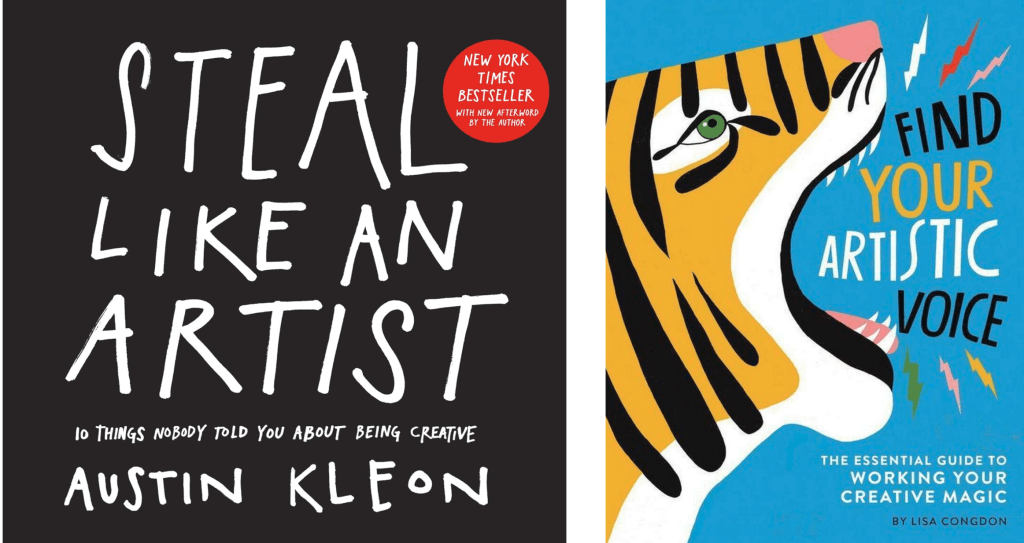
I have taken this to the extent, that I have developed workshops for the Royal Photographic Society on this topic. Two books that have influenced and guided my beliefs on the development of a creative voice are shown below (Kleon 2012), (Congdon 2019)
With regard to what constitutes Plagiarism, I remain somewhat conflicted. Several examples discussed within the collaboration project of Susan Meisels and others (Azoulay 2016), feel (in my opinion) to have crossed the line into plagiarism. I do not believe this will represent a popular belief, and perhaps I am too closely wedded to photographers such as Robert Frank to whom my early passions for photography were ignited. However, I believe that in taking samples of such work and using it to create other more simplisticly derived work (albeit original conceptual ideas), represents plagiarism.
REFERENCES:
Azoulay, A., 2016. Photography consists of collaboration: Susan Meiselas, Wendy Ewald, and Ariella Azoulay. Camera Obscura: Feminism, Culture, and Media Studies, 31(1), pp.187-201.
Congdon, L., 2019. Find Your Artistic Voice. Chronicle Books.
Kleon, A., 2022. Steal Like an Artist 10th Anniversary Gift Edition with a New Afterword by the Author: 10 Things Nobody Told You About Being Creative. Workman Publishing.
 The Photography of David Rosen