
This has been a particularly enjoyable, stimulating and fruitful week. Despite being slightly behind and having to write up my CRJ on Monday, the rest of the week has more than made up for the loss of one day.
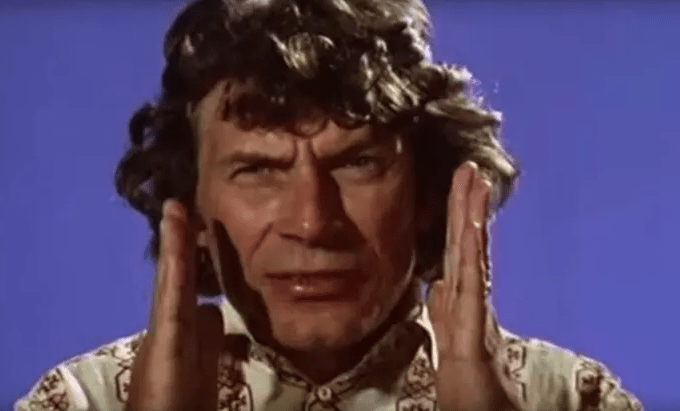
Monday afternoon I came across the series by John Berger ‘Ways of Seeing’ a BBC 4 part series broadcast in 1972. Despite its low budget, low tech, and now outdated social references, the series was an outstanding appraisal of the way we interact as a society with visual communication. Its BAFTA award was well deserved and in fact, the series is seen as one of the most influential TV programmes about art ever made! I came away recognising the highly interwoven relationship between fine art and photography. The episode on the way in which gender influences how we are seen was simply spellbinding. The changes that have occurred over the past 45 years now seem even more immense. The final episode on how images play a role in advertising was simply astounding. Despite my career in related industries to advertising, I could not have been more engaged in the content.
Tuesday & Wednesday were dominated by both reading the various suggested texts (reviewed in my ‘Reading Photographs’ blog post as well as the weekly webinar from Jesse. The session was dominated by the evaluation of an image by Luc Delahaye of a dead Afghan soldier. The image was extraordinary from a number of perspectives. Firstly, rather than being an image supporting a news item, its context is that of a gallery where its price, the way it had been framed and its size places it firmly in the category of fine art. Secondly, it had been very carefully composed and was captured on a large format camera.
The question I began asking myself during the session was how this stood in relationship to the war photography of say Don McCullin. Is this any more or less morally questionable? In terms of the capture process probably not. However, the end of the image journey as an exclusive commodity sold to a wealthy owner in my mind is somewhat questionable. Finally, as I questioned during the session, how would we feel if this was a UK citizen or soldier photographed for the same purposes. I have a feeling this would not occur so readily.
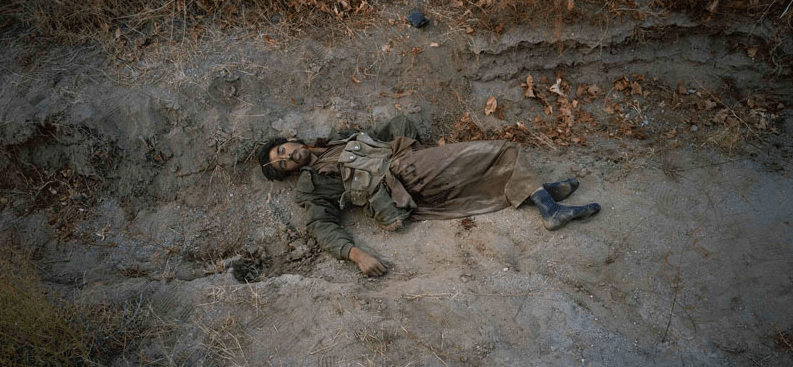
FIGURE 2: Delahaye. Dead Afghan Soldier 2011
Both tasks this week were stimulating and brought to the surface a number of my own emotions regarding their content. in the first exercise, we were instructed to use an advertisement, analysing the image through the perspective of the cues, codes, and rhetoric we have been studying this week. The case of the Marlborough man probably represents a class of advertising that has deceived and had the most detrimental health effects of any product class since the birth of advertising. The false promises and the lack of health warnings combined with government inaction have killed millions worldwide. As to the ad itself, it conforms to all of the publicity methodologies so eloquently laid out by John Berger in his TV series and book by the same name.
Our task for evaluation and comment by our tutors (Tim in my case), was to review two images of Afghan girls. One, the famous green-eyed girl made famous by Steve McCurry, the other, Bibi Aisha who had been mutilated by Taliban for leaving her husband. This was a highly engaging and motivating exercise. I found it hard not to feel shocked and sickened by the events but tried to maintain an objective focus on the task. My own approach focussed on both the studium and puntum aspects of the image as well as reviewing the context in which it was seen and the contradictory ways in which it was used to promote very different political views.
Thursday Last night, I had a series of ideas for my research project and ultimately FMP. I was reviewing the work of Richard Avendon and his body of work taken in the American west. I started to imagine how this methodology might be used in my own intended project within soup kitchens or food banks. Up to now, I have only identified a target issue to address and the context in which this might be explored. A creative concept has yet to be fully fleshed out. This might be a possible direction.
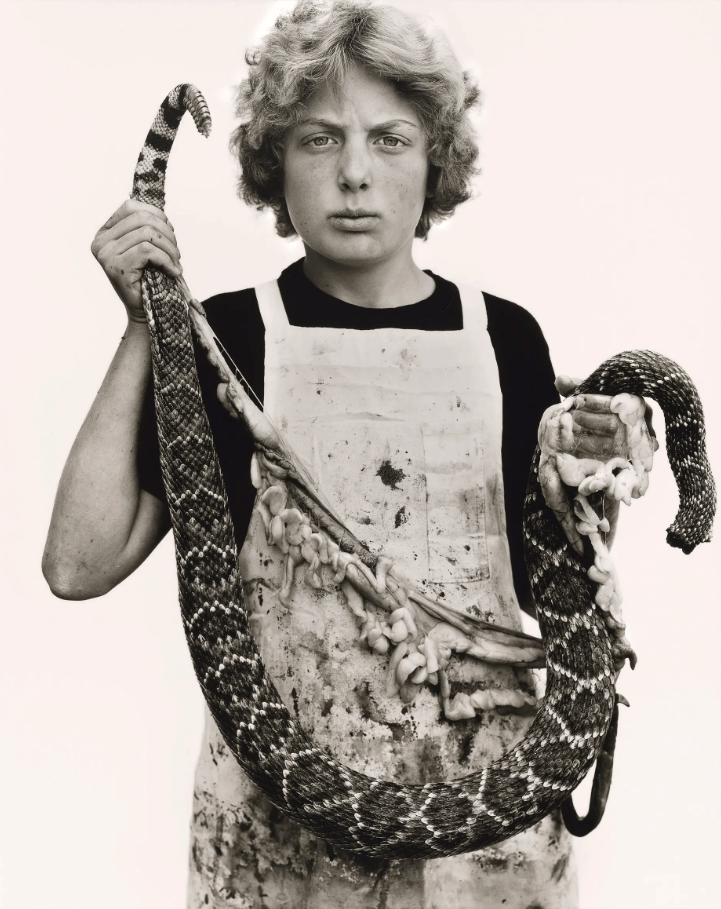
The idea is as follows: To shoot the person setting up the soup kitchen and one of her longest-standing clients. Each set of photographs would form one-half of a spread indicating their relationship. They would be shot using a portable white backdrop in the style of Avendon’s American West portraits. They would be stark powerful and have strong eye contact. Alongside each of their stories would be used to highlight the junctions in their lives when decisions or circumstances would dictate how their future would unfold. A clear comparison would be obvious by the side-by-side placement of their portraits. A great deal to work through but progress never the less.
FIGURE 1: BERGER, John. 1972. Ways of Seeing. The Guardian [online]. Available at: https://www.theguardian.com/books/2022/jan/17/ways-of-seeing-at-50-how-john-bergers-radical-tv-series-changed-our-view-of-art [accessed 19/10/2023].
FIGURE 2: O’HAGAN, Sean. 09.08.2011. ‘Luc Delahaye turns war photography into an uncomfortable art’ Guardian [online] Available at https://www.theguardian.com/artanddesign/2011/aug/09/luc-delahaye-war-photography-art [accessed 14 February 2023]
FIGURE 3: AVENDON, Richard. 2011. ‘Boyd Fortin, Thirteen-Year-Old Rattlesnake Skinner Guardian [online] Available at https://www.theguardian.com/culture/gallery/2017/feb/25/richard-avedon-american-west-texas-in-pictures#img-1 [accessed 19/10/2023]
 The Photography of David Rosen