
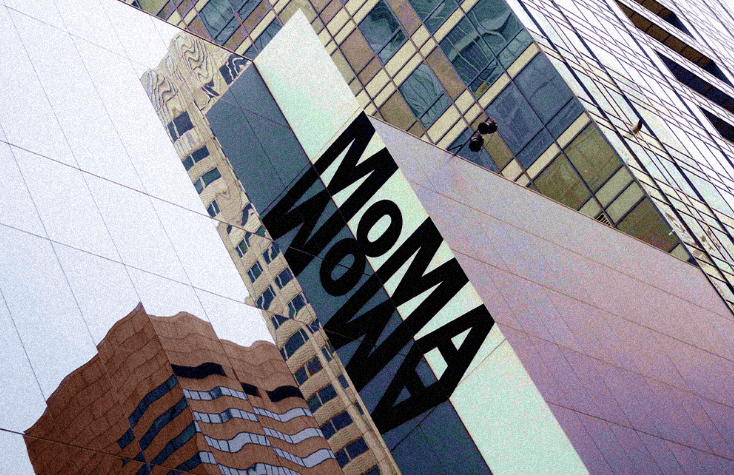
Task: How has your own practice been shaped, manipulated perhaps, by the makers of the technology you employ and/or the spaces in which you share your work? What institutions do you wish to engage with to further your photography? How / Will your skillset and practice need to develop in order to be accepted within that institution? If you do not consider yourself to be a ‘professional’ photographer, what do you think you need to do or achieve for this? If that is not something you desire or aspire to, how would you like to be referred to, and how will you achieve that?
Having actively participated in the creation of images since the age of 13 I have lived through a dramatic shift in the way in which photographic images are created, manipulated, and shared. I have watched with eager anticipation as photography has continued its inexorable rise as a revered art form, despite it arguably lacking the aura of the fine arts (Benjamin 2018). I also experienced the birth and rise of digital technologies which have transformed the way in which we capture display and share our images.
There were many who prophesied the demise of photography as an art form seeing digital as a transgression in the historical development of the art of photography. William J Mitchell in his book The Reconfigured Eye commented on the transition from analogue to digital (Mitchell 1994) “There is simply no equivalent of the permanently archived, physically unique photographic negative. Image files are ephemeral, can be copied and transmitted virtually instantly and cannot be examined (as photographic negatives can) for physical evidence of tampering. The only difference between an original file and a copy is the tag recording time and date of creation – and that can easily be changed. Image files therefore leave no trail, and it is often impossible to establish with certainty the provenance of a digital image.”
Despite the misgivings of commentators at the time, I saw the transition as positive. Digital cameras facilitated a more spontaneous approach to image-making, opening up the opportunity for post-production creativity that replaced the more limiting less intuitive process of enlarger-based photographic image printing.
More recently the advent of digital photography has been itself transformed, by the explosive growth of social media. In particular, the active participation of millions of photographers in social media platforms such as Flickr, Instagram, Facebook. This perhaps more than the advent of digital technologies has transformed the very meaning of photography. As Nathan Jurgenson describes in his book Social Photo (Jurgenson 2019), “Social photography heralds a transformation in the way that not only images, but also the camera, should be understood”. Unfortunately, I now find myself caught in the seemingly luddite trap of dismissing iPhone photography as lazy, even resorting to accusing iPhone users who purport to be photographers as denigrating the very meaning of photography. I realise just how antiquated I must sound! I can only justify my comments by expressing my genuine love for the art and practice of photography, its creativity, its practitioners and more latterly its academic credentials.
Back to the topic of social media, there is no doubting the thrill of likes and follows when one first starts sharing images on the platforms such as Flickr and Intagram. However, over time I have learned that the unspoken algorithms that drive engagement do not equate to the quality and depth of meaning possessed by an image. The ‘bangers’ as they are referred to on Instagram for example follow predictable and self-limiting rules. Dramatic diagonal shadows, cinematic colour grading and shallow depth of field to highlight street portraits will encourage ratings, but when followed slavishly over time can stunt creative output.
At the risk of professional mockery, I profess to being guilty at various points in my practice to these forms of creative seduction. I now see them however for what they are, a slippery slope of short-term dopamine-inducing affirmation that drives traffic, but do little to enhance the development of photographic practitioners.
The question asked of us, is to what institutions we wish to engage with to further our photography. My own journey is that of wanting to be recognised as creating bodies of works that have meaning and will be viewed as contributing to debates on important social issues. To achieve this I am looking to achieve exhibitions for my future work. Sontag describes the arrival of photography onto the walls of museums and art institutions as a conclusive victory in the transition of photography into a respected and recognised art form. (Sontag 2001). I am hoping that I may one day join the long list of esteemed photographers who have achieved this accolade for their work.
In order to achieve work worthy of being exhibited I believe there are a number of learning journeys I will need to follow. Firstly, I will need to commit to and execute faithfully a documentary project that displays an understanding of and empathy for an important social issue of our time. My work will need to display a consistency of output, that has been underpinned with research and displays academic rigor in its thinking. All of these things, I am determined to achieve during my time on the MA at Falmouth, both from the professional teaching staff and from my peers.
As to the label of professional, semi-professional, or amateur, I have been somewhat fluid in my own perception and self-presentation to date. I have been paid for my workshops at the RPS or for the occasional minor commission. Mostly, however, the sheer joy of photography in all that it entails has given me everything I could wish for in a creative endeavor. Besides, as they say, labels are just that, labels.
FIGURES
FIGURE 1: Stock Photo. 2023. MOMA Museum. New York. [online] Available at: https://www.institutionalinvestor.com/article/2bstpd2r1lxpro44aw5xc/corner-office/moma-poaches-nyu-managing-director-for-cio-post [Acessed Nov 16 2023]
REFERENCES
Benjamin, W., 2018. The work of art in the age of mechanical reproduction. In A museum studies approach to heritage (pp. 226-243). Routledge.
Jurgenson, N., 2019. The social photo: On photography and social media. Verso Books.
Mitchell, W.J., 1994. The reconfigured eye: Visual truth in the post-photographic era. Mit Press.
Sontag, S., 2001. On photography (Vol. 48). Macmillan.
 The Photography of David Rosen