
Task: Reflect on the ‘triangle’ model in relation to your own practice: do you feel that there is any kind of imbalance in terms of the relationships between the three ‘corners’? Think about any previous experiences out shooting: have there ever been any moments when you felt that what you were doing, or had done, was unjust or inappropriate? If so, what prompted this? What did this experience teach you about your approaches, both practically and conceptually?
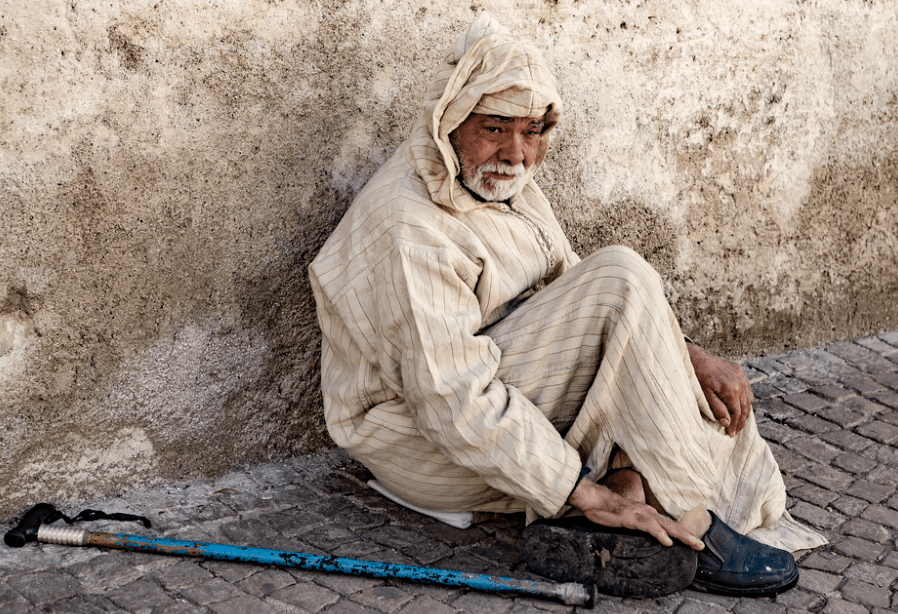
In choosing to photograph the homeless and those experiencing depravation, the subject, author audience triangle is most certainly skewed. The majority of the power balance lies with the author – myself the photographer. Not only do I possess the majority of the agency within the relationship, but also the ultimate choice in what to photograph, how it is photographed, and what ultimately will be shown to a wider audience & where.
There is also an imbalance of power with regard to the subject and audience. The subject will have little say or influence on how the photographs are viewed. Cultural norms will determine how the subjects will be perceived. Barthes refers to this as the signifiers and the signified (Barthes 1981). How each photograph will be read will also be highly dependent on geography. For example, being seen begging on the streets of Calcutta will be viewed very differently from perceptions of begging on the streets of London.
The dangers of poverty porn (the exploitation of those less fortunate as a means of entertainment) is another important aspect of the triangle. (Bell 1992). With the subject highly susceptible to exploitation.
Every photographer makes choices when choosing his subject and the way and style in which to photograph them. Arguably the most important element in defining the morals of a particular photograph is to examine the possible motives and intent of the photographer.
- Has the photograph been taken purely for financial gain?
- Does the photographer demonstrate empathy for the subject based on previous work?
- Has the subject been allowed to participate in the creative process?
- Has every attempt been made to minimise the risk of othering?
When starting out in documentary photography, there is a risk of being drawn to photograph scenes of poverty, destitution, violence, or criminality for its own sake. Often encouraged by the work of photographers who have dedicated their lives to such genres. However, when this is done without an understanding of the background, a lack of understanding of the ethics of documentary photography, or a disregard for the impact it may have on the subject (or indeed viewer) it is likely that this will be deemed as gratuitous rather than serious respected documentary work.
I have been guilty in my youth of photographing some of the poorest townships in South Africa. I was in my early 30’s and had little understanding of documentary photography or the real-life struggles faced by the majority of the subjects captured during my trip. While the photographs were seen as powerful one even winning an award, I have more recently come to view the work as cultural poverty porn and no longer feel proud about the images captured and shared.
in making a start on my documentary journey with my MA course at Falmouth, I will be approaching future projects such as my intended FMP on homelessness with a very different perspective. I intend to study the ethics, impact, and background of my subjects carefully and have made my first tentative steps in this direction by embedding myself in the organisation Charity Begins at Home in central Lonon. Together with a deep study of the academic and ethical issues surrounding this type of work, I hope to create an informed, delicate portrayal of my subjects and their stories.
FIGURES
Figure 1: David Rosen. 2019. Tetouen Medina, Morocco
REFERENCES
Barthes, R., 1981. Camera lucida: Reflections on photography. Macmillan.
Bell, H. and Gigi, D.M., 1992. Eating the other: desire and resistance. Black Looks: Race and Representation, Boston, South End Press, 21, p.39.
 The Photography of David Rosen