
Task Select a single image from your own photographic practice and outline your ethical approach. How might you adapt your photographic practice (visually / technically / conceptually) as a response to this reflection? Are there any approaches / practices / practitioners that specifically resonate with you? Outline any ideas / visual practices you were particularly interested in Identify any ideas / visual practices that challenged / shed new light on your existing practice. Contextualise these in the context of your own photographic practice and the nature of the gaze within it Outline / summarise your independent research Moving forwards: What are your action points? Where are you going next?
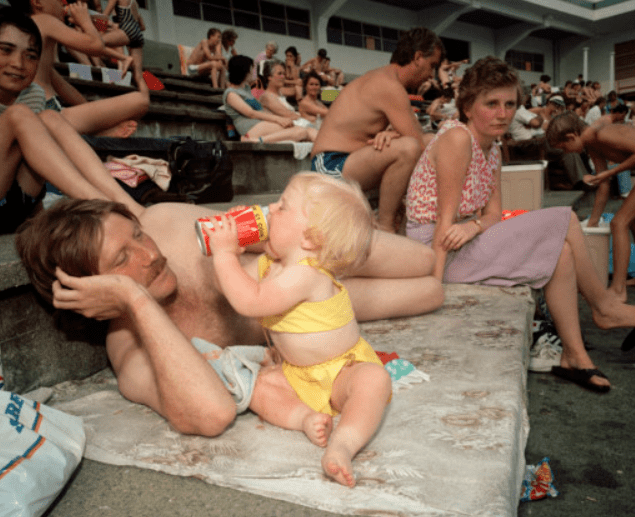
Susan Sontag famously quoted: “To photograph people is to violate them, by seeing them as they never see themselves, by having knowledge of them they can never have; it turns people into objects that can be symbolically possessed” (Sontag, 1979). I would like to challenge this assertion. There are indeed some photographers who look to exploit their subjects and can do this in several ways. For example, depicting stereotypes is a common photography strategy of Martin Parr. In books such as The Last Resort, we are encouraged to ‘other’ a local community in a deprived area of the Northeast holidaying at a local beach.
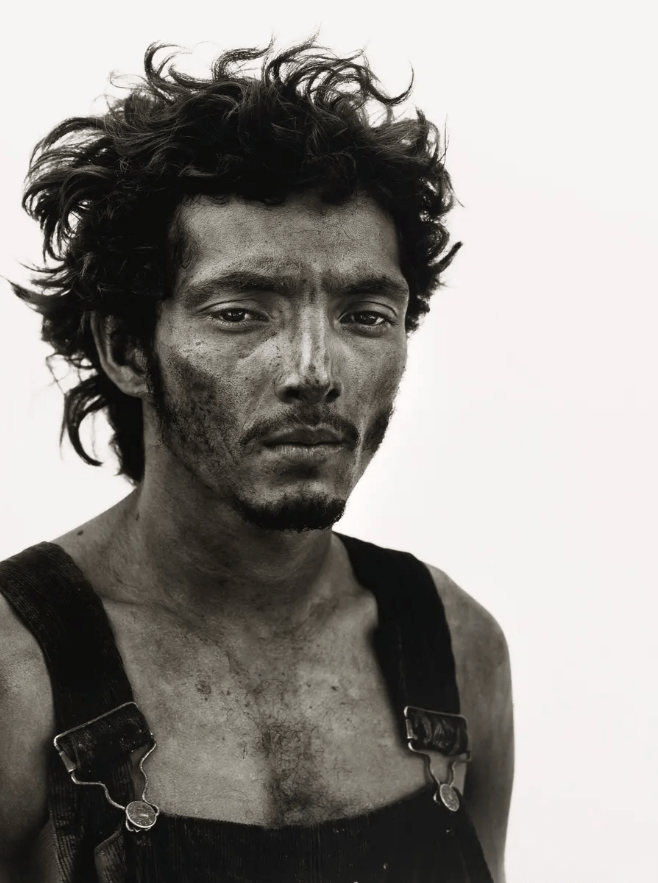
However, this does not have to be the only documentary strategy employed when photographing poor or disadvantaged communities. During the first Positions and Practice module, I found myself drawn to the work of Richard Avedon who traveled extensively throughout the American West, creating a body of work, documenting the poorly paid workers of towns in deprived and run-down areas of mid-western America. Avedon’s images avoid the power appropriation trap, allowing us to explore a rich tapestry of individuals who display a fierce sense of individualism despite their harsh and difficult working conditions.
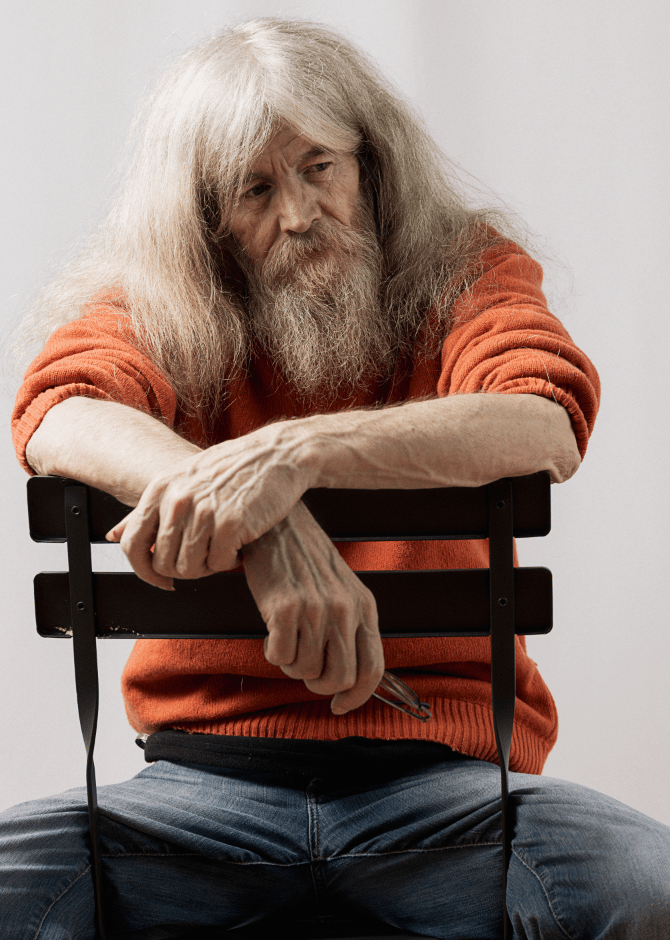
With regard to my own practice, the issue of the gaze was particularly poignant in the project arising from the initial Positions and Practice module. Inspired by Avedon, I brought a series of homeless individuals into my home studio. I was keen to avoid the stereotype approach and looked to create a meaningful interaction with each of the subjects. I achieved this by shooting all of the subjects in the same way (both the homeless and charity volunteers) so that stereotype signifiers would be mostly absent from the frame.
LIST OF FIGURES:
Fig 1: Martin Parr • 2020. The Last Resort. Magnum Photos [online]. Available at: https://www.magnumphotos.com/arts-culture/society-arts-culture/martin-parr-the-last-resort/ [accessed 9 Mar 2024].
Fig 2: Richard Avedon. 1980 In the American West. The Guardian [online]. Available at: https://www.theguardian.com/culture/gallery/2017/feb/25/richard-avedon-american-west-texas-in-pictures#img-1 [accessed 9 Mar 2024].
Fig 3: David Rosen. 2023. Thomas
REFERENCES:
SONTAG, S. (2004). Regarding the Pain of Others London: Penguin.
 The Photography of David Rosen