
Task: Identify any aspects of the module that have influenced your own developing practice, including your peer / tutor discussion / feedback in forums and webinars. Why and how? What changes did you make? Consider the means by which you might discuss and contextualise your photographic practice and how you might articulate this in your own reflections. Choose one key image from your planned Work in Progress Portfolio you feel is successful. Why? Choose one image from which you have edited, out of your planned Work in Progress Portfolio, that you feel is less successful with regards to your intent. Why? Consider the means in which your work should be viewed. (context, scale, edit, sequencing, captions etc).
In reviewing the role of advertising, we observed how the media employ strategies to encourage a dominant reading. This in all honesty was something I understood well as an Advertising Planner. However, I had not considered this subject fully in the creation of my own work. I was under the mistaken impression that my own personal reading would be the dominant reading that would prevail. I now recognise the naivety of this belief. I now recognise, that it is perhaps counter-productive to create work in which a single-track dominant reading is the intended outcome. I now see that an ambiguous creative concept is both richer and more engaging for the viewer.
Our review of the unseen, whilst not unfamiliar, reminded me of my interest in focussing on outlier images that are often not immediately be seen as worthy of capture. It is no surprise, that I am a fan of the works of William Eggleston and other photographers in this genre.
Meanwhile, contexts of consumption opened my eyes to the importance of the environments in which image consumption takes place. I have to date been guilty of focusing primarily on the gallery wall. There have been several reasons for this. Firstly, I believe it bestows validation on the photographer and his work. However, I recognise that simply by its inclusion, work is catapulted to a status of false legitimacy. Meanwhile, photobooks have always been of interest, however, it is only during this module and the various interviews shared on Canvas, that I recognise the full importance of sequencing and choice. I now recognise that these by themselves can make or break a photobook as well as driving the direction of its perceived intent.
As to the changes that I have made with my practice, I believe they have been personally significant. I entered the course articulating a desire to move beyond aesthetic mastery. Prior to the course, I struggled to understand the meaning of narrative within image-making and was unable to construct frameworks for cohesive and meaningful documentary photographic projects. Whilst I am only somewhat down the road in this regard, I am at least cognisant of the fundamental principles and hope to employ these in future documentary-based project work.
A major influence in this regard has been the photographer Todd Hido, who I have spent some time studying during the course. Todd Hido has a similar background to my own and is both open and expansive as to how photography represents his personal source of therapy. His description of using photography to recreate scenes from his past enabling him to reconstruct and make sense of his personal history resonated strongly with me. My project this module was an attempt to achieve a similar catharsis.
My project completed at the end of Informing Contexts was purposely personal. In a way, this made the creation of narrative far easier and was a useful first step in understanding how to envision and construct narratives. Once the intent was clear, the structure of the narrative fell into place and the choice of signifiers and metaphors seemed relatively straightforward. Once these choices were made I became drawn to photographers who had used similar visual strategies. Predominantly Robert Darch, Todd Hido and Michael Kenna.
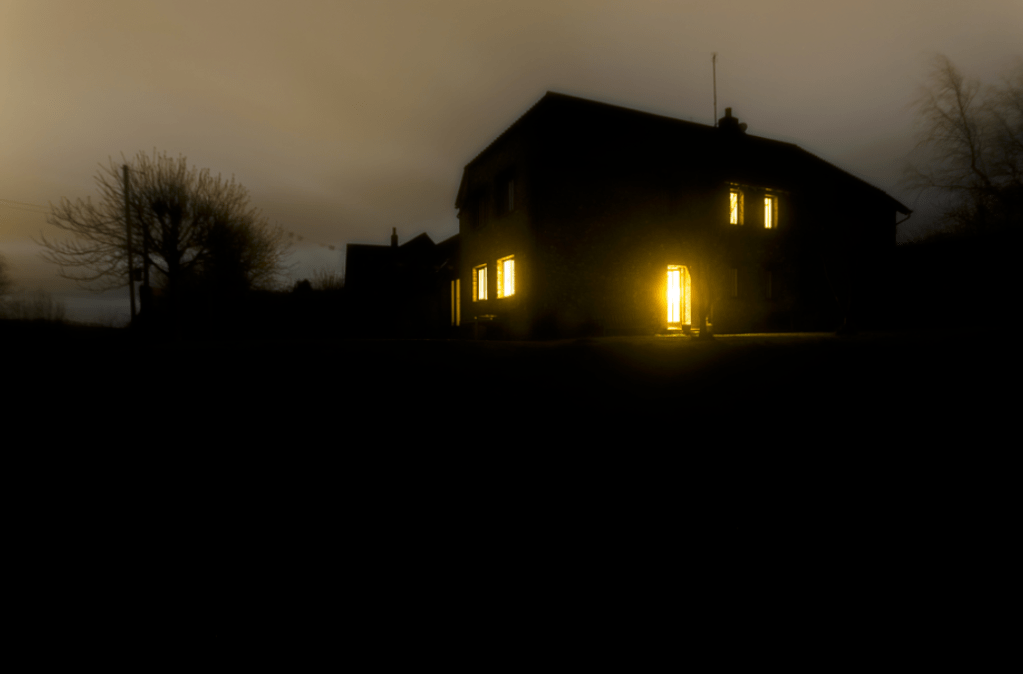
The image shown above represents an image I believe works particularly well. It was inspired and informed by the work of Todd Hido and signifies my own childhood isolation in my bedroom as an escape from childhood familial trauma. I had envisioned this image early on and had meticulously planned its execution. I believe it supports the descriptive text well and is both evocative and provocative.
With regards to consumption, I remain committed to the gallery and photobooks as my primary means of transmission. In part motivated by the belief that accompanying text as seen in many exhibitions offers a depth of insight the images alone are often unable to achieve.
 The Photography of David Rosen