PHO 720 | Week 11: Speaking Photographically

Task: Identify any aspects of the module that have influenced your own developing practice, including your peer / tutor discussion / feedback in forums and webinars. Why and how? What changes did you make? Consider the means by which you might discuss and contextualise your photographic practice and how you might articulate this in your own reflections. Choose one key image from your planned Work in Progress Portfolio you feel is successful. Why? Choose one image from which you have edited, out of your planned Work in Progress Portfolio, that you feel is less successful with regards to your intent. Why? Consider the means in which your work should be viewed. (context, scale, edit, sequencing, captions etc).

In reviewing the role of advertising, we observed how the media employ strategies to encourage a dominant reading. This in all honesty was something I understood well as an Advertising Planner. However, I had not considered this subject fully in the creation of my own work. I was under the mistaken impression that my own personal reading would be the dominant reading that would prevail. I now recognise the naivety of this belief. I now recognise, that it is perhaps counter-productive to create work in which a single-track dominant reading is the intended outcome. I now see that an ambiguous creative concept is both richer and more engaging for the viewer.

Our review of the unseen, whilst not unfamiliar, reminded me of my interest in focussing on outlier images that are often not immediately be seen as worthy of capture. It is no surprise, that I am a fan of the works of William Eggleston and other photographers in this genre.

Meanwhile, contexts of consumption opened my eyes to the importance of the environments in which image consumption takes place. I have to date been guilty of focusing primarily on the gallery wall. There have been several reasons for this. Firstly, I believe it bestows validation on the photographer and his work. However, I recognise that simply by its inclusion, work is catapulted to a status of false legitimacy. Meanwhile, photobooks have always been of interest, however, it is only during this module and the various interviews shared on Canvas, that I recognise the full importance of sequencing and choice. I now recognise that these by themselves can make or break a photobook as well as driving the direction of its perceived intent.

As to the changes that I have made with my practice, I believe they have been personally significant. I entered the course articulating a desire to move beyond aesthetic mastery. Prior to the course, I struggled to understand the meaning of narrative within image-making and was unable to construct frameworks for cohesive and meaningful documentary photographic projects. Whilst I am only somewhat down the road in this regard, I am at least cognisant of the fundamental principles and hope to employ these in future documentary-based project work.

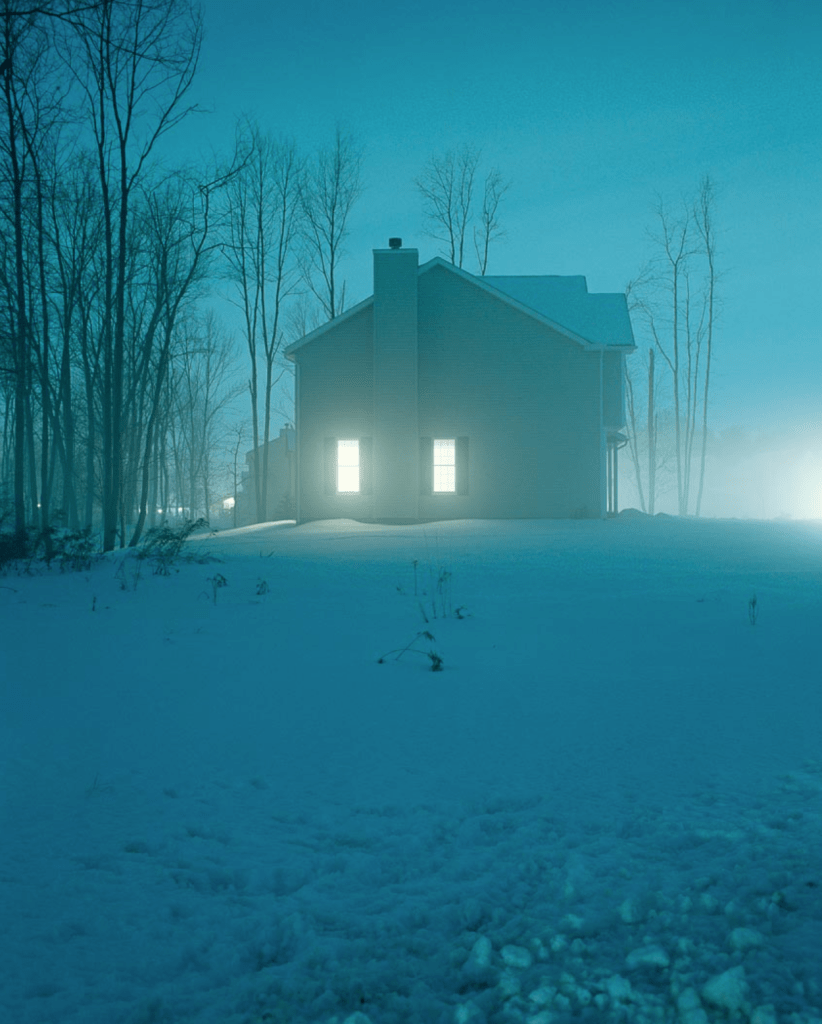
A major influence in this regard has been the photographer Todd Hido, who I have spent some time studying during the course. Todd Hido has a similar background to my own and is both open and expansive as to how photography represents his personal source of therapy. His description of using photography to recreate scenes from his past enabling him to reconstruct and make sense of his personal history resonated strongly with me. My project this module was an attempt to achieve a similar catharsis.

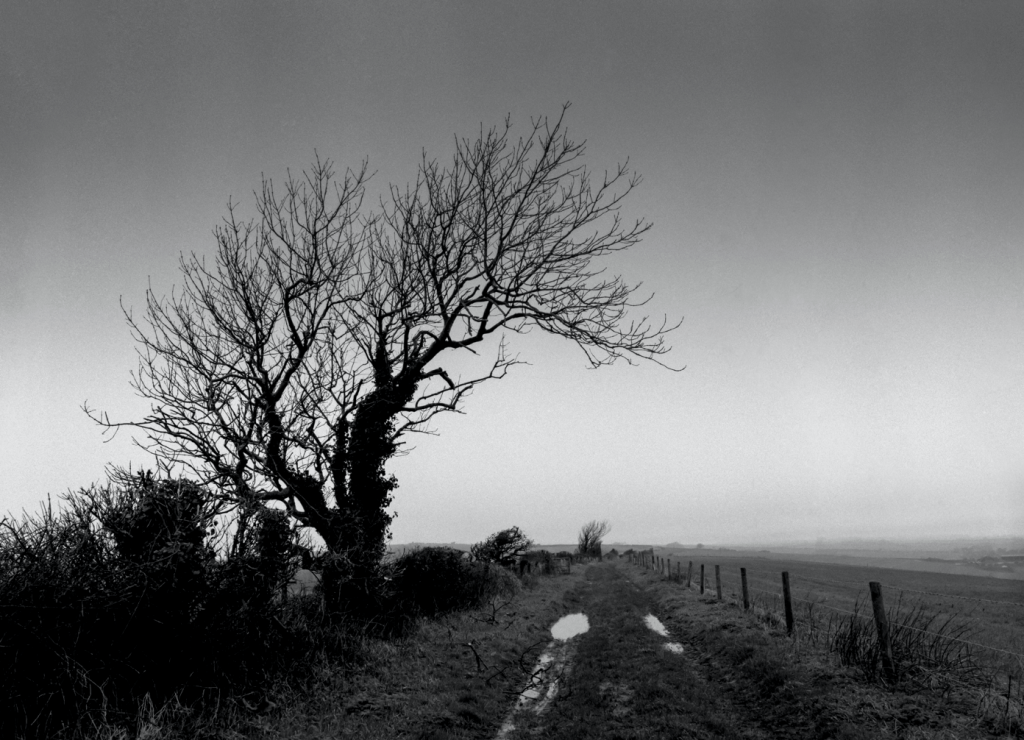
My project completed at the end of Informing Contexts was purposely personal. In a way, this made the creation of narrative far easier and was a useful first step in understanding how to envision and construct narratives. Once the intent was clear, the structure of the narrative fell into place and the choice of signifiers and metaphors seemed relatively straightforward. Once these choices were made I became drawn to photographers who had used similar visual strategies. Predominantly Robert Darch, Todd Hido and Michael Kenna.
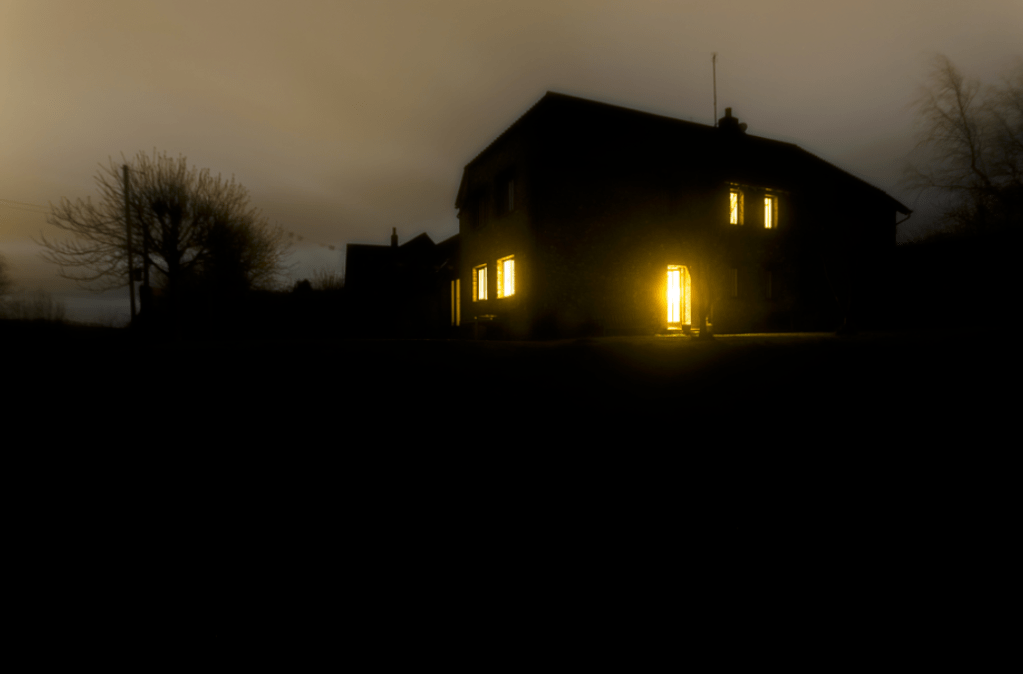
The image shown above represents an image I believe works particularly well. It was inspired and informed by the work of Todd Hido and signifies my own childhood isolation in my bedroom as an escape from childhood familial trauma. I had envisioned this image early on and had meticulously planned its execution. I believe it supports the descriptive text well and is both evocative and provocative.

With regards to consumption, I remain committed to the gallery and photobooks as my primary means of transmission. In part motivated by the belief that accompanying text as seen in many exhibitions offers a depth of insight the images alone are often unable to achieve.
PHO 720 | Week 10: Contexts of Consumption

Task: How are different practitioners ‘curated’ together? What is the overall rationale? Identify and research a real life group exhibition / book chapter you feel your work would fit into. What is the curatorial intent of the exhibition / chapter and why would your work be included in it? How did the critics / reviewers receive the exhibition / book / practice? How do you relate your own practice to the other works included? Why? Could you ‘curate’ your own exhibition / book chapter with other practitioners who have informed your work? What would the rationale be? What connects the work?

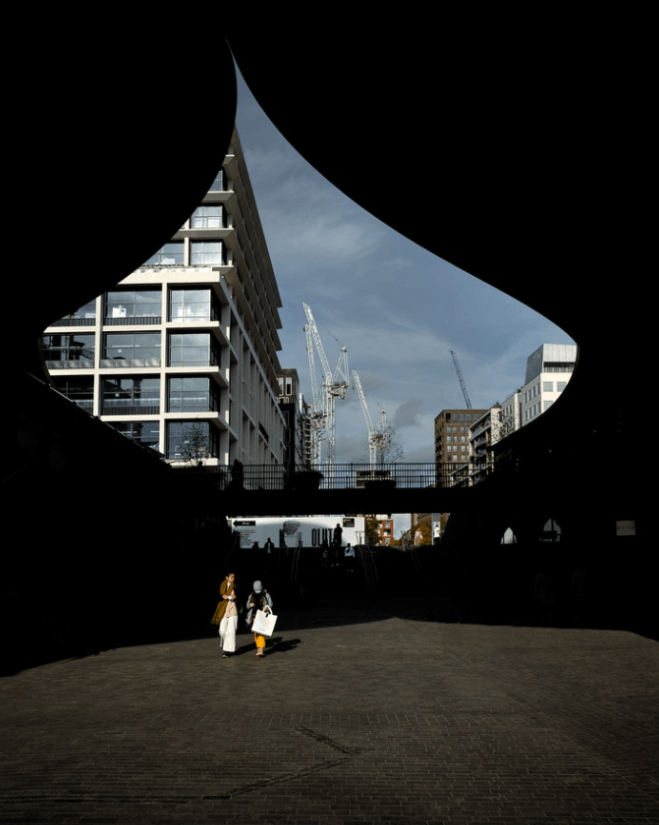
Fig. 1 David Rosen (2022) Granary Square Shadows. Kings Cross

Practitioners, when curated together for an exhibition, are often selected as a result of prior research and a series of selection meetings. Normally, the subject examined will have both social significance and be highly topical. There will also always be an underlying theme of commerciality driving choices, which may be either ‘of the moment’ or be deemed to have the potential of attracting a large enough audience to generate profit. There will also be a desire to be seen as on-message, as well as making every effort to ensure a positive reception by art critics.

A great deal of my work to date has been either of the landscapes of Iceland or the streets of London. Two very different subjects and approached differently both in intent and narrative, as well as execution style. One is fine art monochrome, the other (my street work) is highly saturated, backlit and with subjects generally as silhouettes. I believe my street work would more likely chosen, particularly as this has the more relevant and topical narrative. In essence, my images explore the spaces in which we are left by architects in which to work, travel and interact within the city of London. This is becoming increasingly fraught, as public spaces are steadily eaten away by land grabs around major new office buildings.

I can imagine a theme in which urban lifestyle, architecture and congestion are discussed and explored, as a way of highlighting the key issues facing the policy-makers and planners tasked with making London a viable and sustainable city of the future. To ensure the show will be a success, it will have to avoid older cliched tropes of congestion, pollution and poor planning. Instead, it will need to find a way to bring innovation and original thinking to the work and curatorial direction. I would see my current work as showing the diminutive figures of humans dwarfed by the scale of commercial buildings and the loss of community this can engender.

Finally, although I am inexperienced in the task of curation, I believe I would be able to curate a show if the topic was relevant to my own creative and social interests and existing bodies of work.

List of Figures

Figure 1. David Rosen (2022) Granary Square Shadows. Kings Cross

PHO 720 | Topic 9: Aesthetic or Anaesthetic

Task: How do you ‘transform’ the world? How might your work be (or not be) considered as a ‘message’? How does context influence how people view your work? How do aesthetics influence the way people view your work? Did any ideas particularly interest you? What challenged you? Have your ideas changed? In your independent research, reflect on your practice in the context of specific visual practices and theoretical points.

FIGURE 1. David Rosen (2023) Food Parcel

This week we looked at images that are used to project powerful messages, intended to influence us to act or at least exert political pressure with regards an issue. It is rare I believe for an image to transform the world, although, there are a very few examples of images that have achieved this. For example the napaalm girl in Vietnam, or the young migrant boy washed up on the beach in Greece. Such was the anger, guilt and shock that when viewed, these images influenced many people to express outrage, to demonstrate and or initiate a call to action.

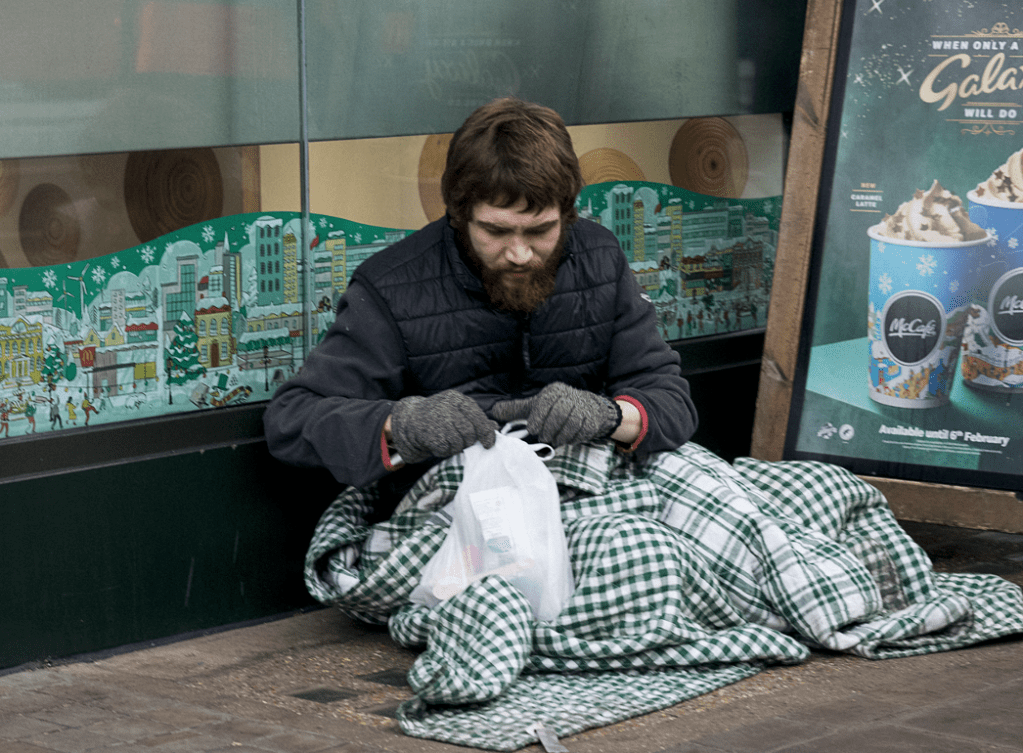
At a lower level of impact, advertising images are designed to acheive a similar objective, although in most cases the intention is not to shcok, but to create a desire built around insecurity. This in turn encourages the viewer to purchase a previously unconsidered or partially considered item (Berger 2008). In my first assignment, I attempted to highlight the plight of the homeless, by capturing individuals in the sterile environment of the studio, rather than surrounded by the sterotypical signifiers of the street. In this current assignment, I have tried to communicate the challenges of life in a bipolar household dominated by melancholia and psychiatric turbulence. I have suggested that a particularly relevant location for an exhibition , would be in the head offices of a mental health charity. I believe viewers at such a location will already be primed and receptive to mental health messaging and would be more likely to engage with communication regarding intergenerational trauma. Another possibility would be to exhibit the images within a more generic setting, but perhaps during mental health awareness week.

How aesthetics influence the way people view my work has been a quandary for a considerable time. Let me try to explain. My first main category of work for a number of years has been monochrome landscapes. I have looked to refine my creative voice within the work and have found that fine art minimal initiatied the most positive response and highest levels of viewer engagement.

However, I have increasingly seen the work as purely art rather than expressing a meaningful point of view. I therefore looked to expand my practice out of this genre and began urban-based projects that highlighted the influence of urban planning and architecture on our daily lives. This work however has not generated the same levels of interest or positive level of response. Despite refining and improving my executional style the images effectively fell on deaf ears. My conclusion was that I can either look to explore new and more courageous forms of image style or perhaps recognise that my journey should not be unduly influenced by opinion. I am still midway in this journey of self-discovery.

Back to the content of this weeks topic and the most striking element personally has been the vehment reaction to the work of Sebastiao Salgado. He has long been one of my aspiratoinal social commentary photographers. I admired both his aesthetic and the issues he sought to bring to life. I had not realised up until this week, that a fierce debate over the role of aesthetics in social issue photography has been taking place for some time. Do I believe that work can innoculate viewers against shock or distress, to be honest I do not have an informed opinion at this stage. However, I would highlight that the plight of miners in third world countries would perhaps never have received such attention without the reverance in which Sebastiao Salgado is held or the number of museums that have featured his work. I will certainly be more cognisant going forward of the possible conflict between aesthtics and message in my practice.

List of Figures
David Rosen. (2023). Food Parcel

References
Berger, John. (2008). Ways of seeing. Penguin London.

PHO 720 | Topic 7: The Unseen and Overseen

Task: Pulling insights from an interview with a practitioner: How do they describe the intent of their work. What are their visual choices? How do they reflect and evaluate their work? How does this inform my own practice? What particular issues and themes resonate?

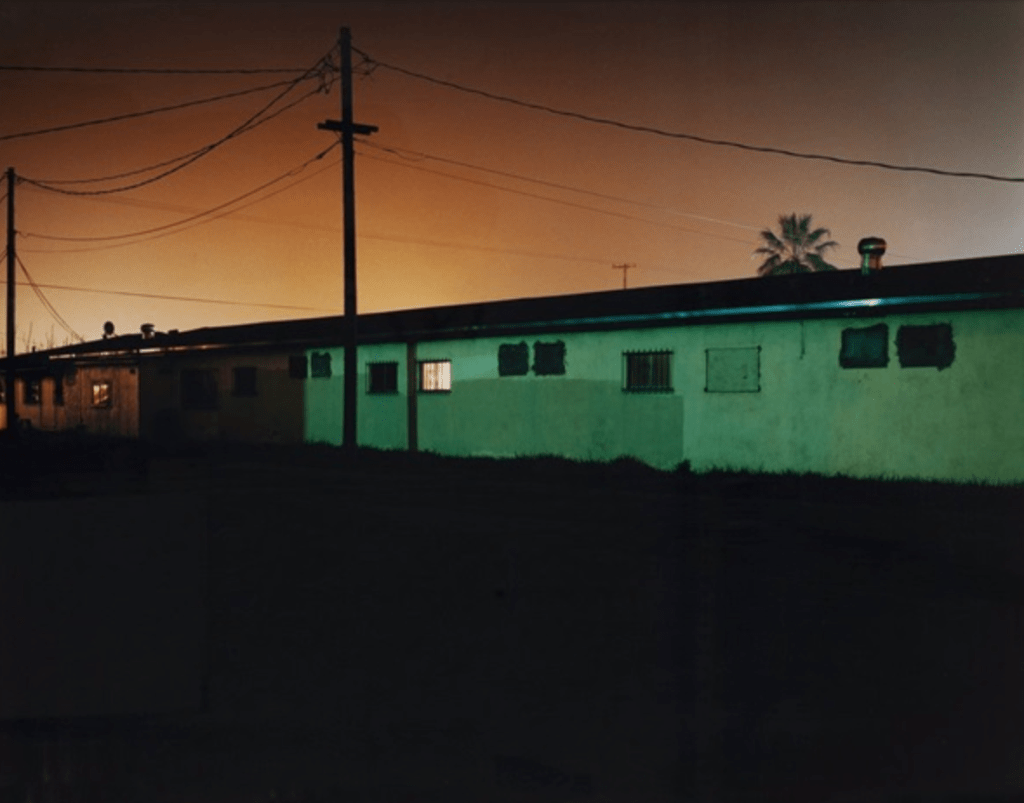
FIGURE 1: Todd Hido. (2017) Untitled

I have chosen an interview with Todd Hido (Christie’s 2017), who I have referenced in my current assignment, who also has previously referred to his challenging childhood, describing how this has subconsciously driven the direction of his work. I have only come to realise recently that my own creative voice is similarly influenced by difficult childhood experiences.

Hido explains that he often tries to recreate scenes that are reflective of his own home. It is not about the subject matter (in this case houses at night), but the stories of the people who live in them. Hido quotes Lewis Baltz who once said that photography sits in a corner between film and literature. Hido uses photography to figure himself out and for him, it is about intuition. He describes his process as the making of paper movies, which he uses to drive the narrative and at times figure himself out. Hido describes how the clear and less clear aspects of an image reflect how our own memories are constructed.

I found Hido’s work immediately resonant. His creation of ambiguity and foreboding is along similar lines to much of my previous work in photographing landscapes. He uses conflicting lighting and deep shadows to great effect. I have to date only used deep shadows to elicit unanswered questions from the viewer. However, as I partially transition into colour I want to similarly use light sources of different colour temperatures to create uneasiness and tension in my work.

List of Figures
FIGURE 1: HIDO, Todd. 2024. ‘Untitled (#3533-A), from the „Homes at Night” Series’. Artnet.com [online]. Available at: https://www.artnet.com/artists/todd-hido/untitled-3533-a-from-the-homes-at-night-series-ZtU7ZLK4tBhUv3xg8JO4pQ2 [accessed 27 Mar 2024].

References
CHRISTIE’S. 2017. ‘Todd Hido: “I Use Photography to Express Myself”’. YouTube. Available at: https://www.youtube.com/watch?v=vTnmO6UXFUc [accessed 27 Mar 2024].

PHO 720 | Week 6: Reading Week

Task: We have been asked to consider the status of our practice with regards the learning outcomes which are as follows: LO1: Process: Negotiate photographic and lens-based imaging techniques according to self-initiated objectives. LO2 research: Determine appropriate research methods and methodologies to develop, produce, inform and critically underpin your creative practice LO4 Context: Assess and analyse the impact of historical and contemporary themes and current visual practices on your practical work and the work of others.

With regards to process, I have chosen to execute this module’s assignment predominantly in medium format film. This has necessitated a return to learning craft skills not revisited since my earlier practice several decades ago before the advent of digital. This has involved a re-learning of for example the finer points of the zone system and how I might apply them as well as the purchase of a Sekonic 580 light meter in order to utilise my learning effectively.

I have also had to study the various pitfalls of medium format capture such as mirror slap and the importance of using a tripod where necessary. Previously I would have hand held. Overall a significant slowing down in the process was necessary but on reflection a much-needed prompt after the over-zealous pace that digital capture encourages.

Another area of renewed study has been in post-processing where I have had to re-learn the full skill set required for negative processing and for the first time the techniques of digital scanning and conversion. Overall the process has necessitated a return to the fundamentals.

With regards LO2 research, this module has introduced us to numerous fundamental new concepts. Many of these I have somehow remained unaware of until now. I had previously only glossed over the concept of image meaning in my practice. The simple phrase ‘a photograph about something’ rather than ‘a photograph of something’ is now indelibly imprinted in my memory and will constantly push me to create better more meaningful work.

The idea of constructed imagery was a new one for me. The work of Gregory Crewdson and others was something of a revelation. I now have this idea as a possible tool going forward when evaluating ideas for new work. In the final weeks, we discussed the many facets of the gaze. This was not new for me. In being informed by the work of Richard Avedon in the first module for my assignment, I has already reviewed many aspects of the gaze. I also studied the views expressed by commentators such as Susan Sontag on the inequalities of power when approaching less fortunate groups as subjects.

Finally, with regard LO4 context, I have started and intend to continue my contextual research of practitioners such as Todd Hido and Robert Darch amongst others. I have found the Aperture series particularly insightful. I have also been researching in less obvious areas such as the book by Susan Bowering on melancholia. Although this was not a source exclusively about photography, nonetheless its description of the visual cues of Melancholia were particularly relevant to the completion of my assignment.

PHO 720 | Week 5: Fascinating Looks

Task Select a single image from your own photographic practice and outline your ethical approach. How might you adapt your photographic practice (visually / technically / conceptually) as a response to this reflection? Are there any approaches / practices / practitioners that specifically resonate with you? Outline any ideas / visual practices you were particularly interested in Identify any ideas / visual practices that challenged / shed new light on your existing practice. Contextualise these in the context of your own photographic practice and the nature of the gaze within it Outline / summarise your independent research Moving forwards: What are your action points? Where are you going next?

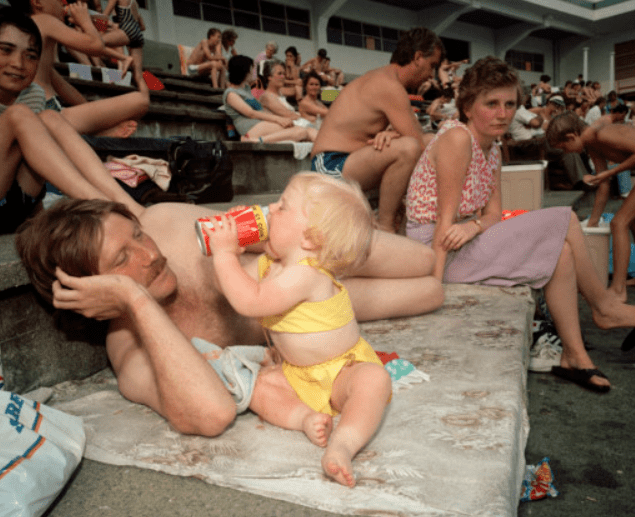
Susan Sontag famously quoted: “To photograph people is to violate them, by seeing them as they never see themselves, by having knowledge of them they can never have; it turns people into objects that can be symbolically possessed” (Sontag, 1979). I would like to challenge this assertion. There are indeed some photographers who look to exploit their subjects and can do this in several ways. For example, depicting stereotypes is a common photography strategy of Martin Parr. In books such as The Last Resort, we are encouraged to ‘other’ a local community in a deprived area of the Northeast holidaying at a local beach.

Fig 1: Martin Parr . 2020. The Last Resort. Untitled

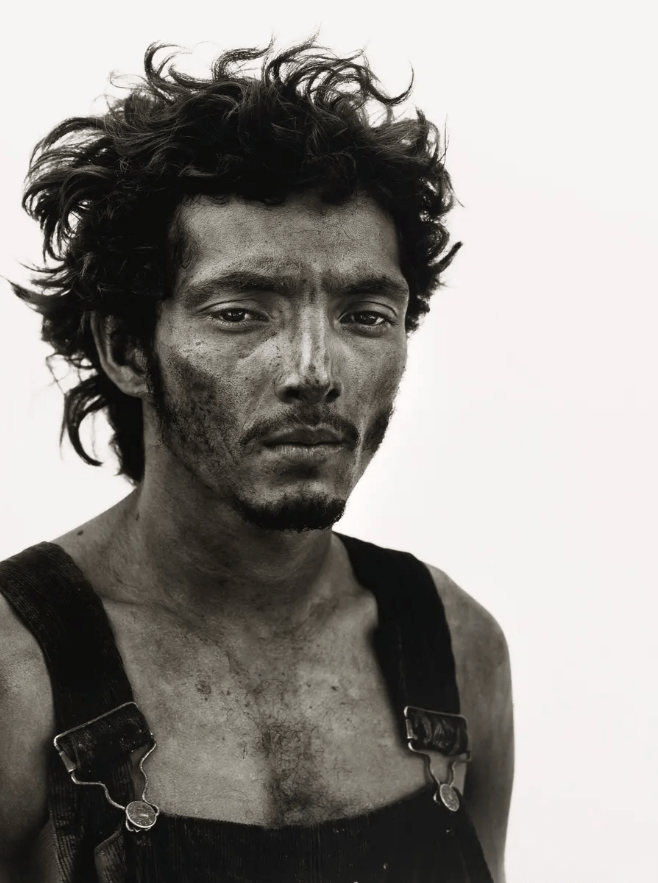
However, this does not have to be the only documentary strategy employed when photographing poor or disadvantaged communities. During the first Positions and Practice module, I found myself drawn to the work of Richard Avedon who traveled extensively throughout the American West, creating a body of work, documenting the poorly paid workers of towns in deprived and run-down areas of mid-western America. Avedon’s images avoid the power appropriation trap, allowing us to explore a rich tapestry of individuals who display a fierce sense of individualism despite their harsh and difficult working conditions.

Fig 2: Richard Avedon 1980. Roberto Lopez, Oil Field Worker

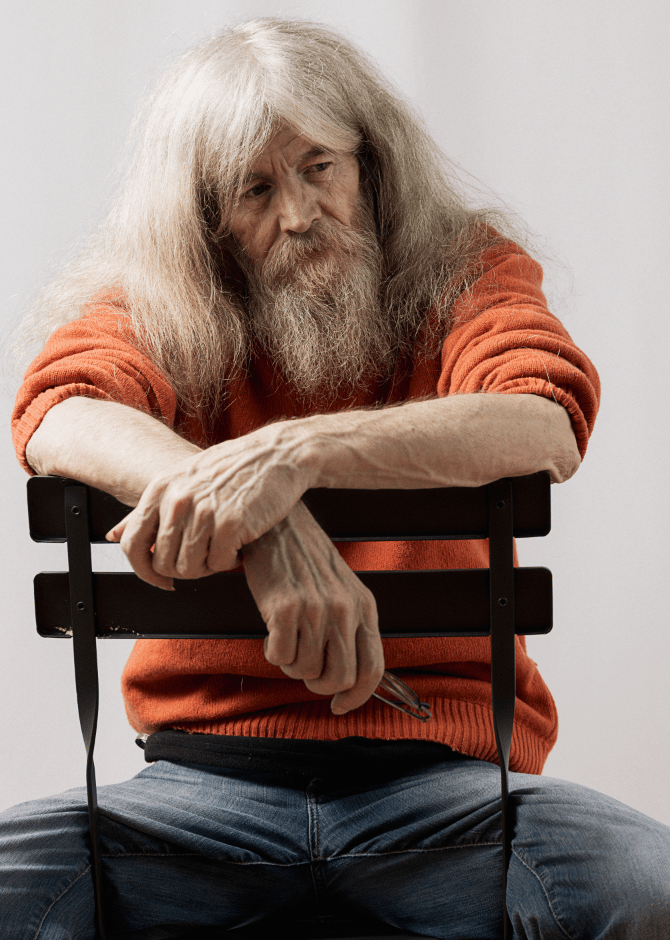
With regard to my own practice, the issue of the gaze was particularly poignant in the project arising from the initial Positions and Practice module. Inspired by Avedon, I brought a series of homeless individuals into my home studio. I was keen to avoid the stereotype approach and looked to create a meaningful interaction with each of the subjects. I achieved this by shooting all of the subjects in the same way (both the homeless and charity volunteers) so that stereotype signifiers would be mostly absent from the frame.

Fig 3: David Rosen. 2023. Thomas

LIST OF FIGURES:

Fig 1: Martin Parr • 2020. The Last Resort. Magnum Photos [online]. Available at: https://www.magnumphotos.com/arts-culture/society-arts-culture/martin-parr-the-last-resort/ [accessed 9 Mar 2024].

Fig 2: Richard Avedon. 1980 In the American West. The Guardian [online]. Available at: https://www.theguardian.com/culture/gallery/2017/feb/25/richard-avedon-american-west-texas-in-pictures#img-1 [accessed 9 Mar 2024].

Fig 3: David Rosen. 2023. Thomas

‌REFERENCES:

SONTAG, S. (2004). Regarding the Pain of Others London: Penguin.  

PHO 720 | Week 4: Into the Image World

Task: Reconsider the visual / technical / conceptual strategies you use to achieve this intent. Identify any approaches / practices / practitioners that specifically resonated with you? Outline / summarise your independent research. Evaluate the development of your own photographic practice to date. Reflect on the peer / tutor feedback you have received on your current / future practice. What are your action points? Where are you going next?

Fig 1: David Rosen. 2023. Naked

Four weeks into the term and I have come to the realisation, that what I thought was the meaning of ‘intent’ was in fact only a small part of its wider and more comprehensive meaning for creating meaningful bodies of photographic work. My intent had previously been limited to a denoted goal for content and an aesthetic target. My newly acquired understanding of Stuart’s Hall’s reception theory explained by differences in our cultural exposure has helped me understand how the signifier and signified are related. It is clear to me that total control of meaning within an image is fantasy. I have now finally accepted this.

Furthermore, a deeper understanding of semiology including the work of Charles Pierce with regard his explanation of the differences between signs, symbols and indexicality have helped me evaluate my work at a deeper more meaningful level. In defining an intent, I have worked this week to create a series of landscape images to reflect the symptoms of melancholia seen commonly within bipolar disorder. Not only have I been able to draw upon semiology, but also explore intertextuality in its broadest sense. Up to this point, I have seen intertextuality as referring only to how textual descriptions and titles influence images. The realisation that intertextuality refers to any external reference to an image, whether visual, spoken, or textual taken from any part of our cultural memory has opened a world of possibilities for creating narratives. Plays, films, TV, poetry, and music are all open for creative plundering.

Photographic influence from practitioners such as Todd Hiddo with his depiction of liminality and codes taken from cinema with Directors such as David Lynch and Alfred Hitchcock are cited as major influences as well as fine art influences such as Edward Hopper. Meanwhile, Robert Darch, who has created a body of work for his book, The Island employs a sinister and foreboding narrative arising from his view of Post-Brexit Britain and its consequent isolation.

I have also more recently come to realisation, that the accurate representation of scenes within a frame can exclude the photographer from the narrative. Engagement with an image is often amplified when the presence of the photographer can be felt. The concept of dirtying up the frame, whether this be for example by the juxtaposition of an out-of-focus foreground element, or the distortions and lack of fidelity seen with film adds both a sense of mystery and voyeurism as well as almost imperceptibly inviting the photographer into the viewing dynamic.

Finally, my work with Paul, led to a conversation regarding my rather formal perspective of viewing my output ambitions as a gallery space rather than looking to ‘subvert the process’ or choosing a less conventional route for dissemination of my work. Although I understand Paul’s perspective and see it as a valid option, my motivations for gallery exposure and photo book output remain strong. That being said, I will review the references forwarded by Paul and others to understand the various influences of gallery space viewership on my intended body of work.

LIST OF FIGURES
Fig 1: David Rosen. 2023. Naked

PHO 720 | Week 3 | Photographic Fictions

Task: Consider the intent of your own practice. How do you articulate this? What strategies do you use to communicate your intended meaning? How do you want your viewer to respond? Think about the fictional / constructed nature of your own photographic practice: identify the ways in which you do / might ‘construct’ the world. Identify any approaches / practices / practitioners that specifically resonated with you. Do any of these ‘constructed’ approaches give you ideas to develop your own practice? Outline / summarise your independent research Evaluate the development of your own photographic practice to date. Reflect on the peer / tutor feedback you have received on your current / future practice Moving forwards: What are your action points? Where are you going next?

The intent of my practice has been considerably influenced by the course at Falmouth. At the time of joining, I had an aesthetically driven practice fuelled by my experience in design and established creative expertise in post-production techniques. This allowed me to create fine art monochrome images, that were seen as aspirational to photographers wishing to improve their aesthetic skills. I began running workshops for the Royal Photographic Society three years ago up until the start of my MA. However, It is now apparent, that my imagined advanced knowledge of photography, was in fact limited to aesthetics, pre-visualisation and technical craft skills. My images may have been replete in mood and composition but lacked a distinctive or meaningful narrative.

My intent is to incorporate my new-found knowledge into work that is derived from substantive research, is linked to a body of work rather than single images and is accompanied by descriptive research text that contextualises the work. Furthermore, I am determined to exhibit or publish my work in the future rather than simply filing it away. The content of the work itself does not necessarily have to generate revenue as I am in the privileged position of not requiring income. However, it should address issues and subject matter that generate interest, excitement, curiosity, or surprise for the viewer. Ultimately, I am driven to constantly create work. However, from now on I will look to find ways to exhibit, share and promote the final output.

How others derive meaning from my work has always been a source of intellectual conflict for me. On the one hand, I tend to seek control over my narratives and look to find ways either through titles or accompanying text to ensure that my communication intentions are fulfilled. In practice, I now understand why this is a flawed strategy. Hall’s reception theory provides insight as to why our work is not always read in the way we imagine. The coding and decoding processes are not mirror images of each other. We can never ensure what Hall describes as a dominant reading. It is just as likely that our work will received a negotiated or oppositional reading. It is perhaps more desirable to leave several aspects of the meaning for the viewer to contemplate and allow them to construct their own narrative from the image. Research has shown that viewers become more engaged with images where they are encouraged to resolve hidden or ambivalent meanings.

I have always looked to the cinema for inspiration in my photography. I often imagine images as frozen scenes on a film set. I believe cinema has long understood the need for mood and emotion to carry the viewer through two hours of narrative however engaging when written. Somehow photography has been slow to catch on, becoming absorbed in its own technical challenges and beliefs regarding the sanctity of the still image. In the age of the internet, photographic work has to work extremely hard to engage the viewer above the noise of social media output and democratised video creation and distribution. To achieve cut-through creative work must deliver new ways in which to view social issues, understand human nature, perceive threats and so on. My own belief is that drama and original thinking are two of the best ways to achieve engagement with an audience. I try to achieve this in my work by using intertextuality drawn from popular culture (mainly cinema) to amplify and shortcut my communication of narrative.

My recent inspirations have been from the likes of Todd Hiddo and Rocbert Darch, although others such as Gregory Crewdson and Ross-Duncan from Perth Australia have recently come into view. These particular practitioners now resonate with my newly found direction, as they appear experts at being able to generate intrigue and drama in the banal. They use implied narratives drawn from popular culture to ask us the viewer to create the drama based on our own experiences. With a childhood spent in a banal suburb of London and a dysfunctional family home hidden behind what is known as Gerry-built housing in the north London suburbs, I want to use photography to explore this hidden aspect of my background. Todd Hiddo states that we are drawn to create work that takes us back to our childhood experiences allowing us to re-draw the narrative in our own way.

Having now had the opportunity to explore several aspects of my new-found research project by traveling to Dorset to shoot both homes and landscapes in the hope of defining a creative direction, my next steps are two-fold. Firstly, to develop scan and process the images taken. Secondly to begin the first steps in structuring my contextual and empirical research for the assignment.

PHO 720 | Week 2: Is it Really Real

Task: We have been asked to consider: In the photograph, the power of authentication exceeds the power of representation (Barthes, 1980:89). Do you agree. Reflect on any ways in which you feel your work might ‘authenticate’ and / or ‘represent. Identify any approaches / practices / practitioners that specifically resonated with you. Outline / summarise your independent research (eg interviews or reviews of relevant practice / reading). Evaluate the development of your own photographic practice to date. Reflect on the peer / tutor feedback received on your current / future practice. Moving forwards: What are your action points? Where are you going next?

In considering this question, at first, I find myself confused. I am confused because the appearance of generative AI has turned this question on its head. Let me explain. Stuart Hall points out in his various writings on reception theory relating to for example TV (Hall 2007). He states that as creators of content in this case visual imagery, we are not in control of the way it is received. Encoding relies on a set of shared cultural values and learned semiotics. When decoded, different cultural values may be applied, and varying learned semiotic vocabulary employed. The intention of representational targets within photography are most often fanciful.

Meanwhile, the context in which a photograph is seen, also influences the way it is understood. Seeing an image in a gallery for example immediately confers a sense of stature and importance. Taken together an image is no more likely to be seen as a singular form of representation than say a fine art painting. Meanwhile, authentication (prior to the appearance of AI), has historically been considered a unique characteristic of photography. The imprint or trace of an event at a particular point in time, even in the absence of photographic apparatus endows an image with the indexicality of the thing itself (Barthes 1981). I would argue in this case that authentication is more permanent than any sense of representational veracity.

However, can we still claim sufficient evidence for the argumentation supporting the dominance of authentication over-representation, when images can be generated out of code, elicited by prompts that do not in any way reflect a trace, reality, or a newly generated idea or conceptual thought. I would argue not. We are entering a new era where we are synthesising, homogenising and plagiarising existing ideas and concepts at an alarming rate.

With regards to my own practice, I would argue that the balance of representation and authentication tends to be influenced by the genre I find myself working in. Within my fine art landscape practice, authentication dominates. I am replaying for the most part, the landscapes I see in front of me. The land is shown as it was in that moment and from that perspective. Conversely, my representation can simultaneously be highly skewed. Fine art demands pre-visualisation. In fine art photography, the photographer’s own vision dominates the image with little regard for its faithful representation of the scene. Furthermore, the interpretive space for the viewer is enhanced by purposefully unanswered questions, often introduced to encourage the viewer to create their own narrative.

With regards my current research project, narrating the experiences of a dysfunctional childhood upbringing, I am exploring the works of Todd Hido through his various lectures and books on his approach to creating mood and narrative, for example in reading the book published by Aperture where he describes in detail his own practice (Hido 2019). I am also broadening my research to include the fine art painters such as John Register and Edward Hopper, who similarly employ liminal cues to elicit a sense of uneasiness and draw viewers to explore their own narratives. Regarding my work in progress, I am currently in Dorset looking to explore and shoot a number of elements of the project including ‘distorted trees’ and isolation within the home. The isolation element is proving challenging in the countryside as there are no streetlights which I now recognise is a critical shot requirement. Finally, I realise that I have focused initially on creating work. Whilst this is a positive, I recogise that I will soon need to start my desk research on bipolar disorder and its effect on siblings to validate and support the creative work and help guide the narrative of the project.

With regards my first tutor 1:1 and peer-to-peer webinar moderated by my tutor Paul – both of these were positive experiences. Overall, I have received some highly insightful guidance which have broadened my perspective on how creative work and research might be constructed. I will need soon to begin fleshing out the narrative, but at this stage, as recommended by Paul, I am allowing myself to freely associate with ideas as described by Alex Soth, in his early stages of Sleeping by the Mississippi (Photo 2020). I am hoping that I will know when the time is right to begin making more concrete my ideas and final creative output.

REFERENCES

Barthes, R., 1981. Camera lucida: Reflections on photography. Macmillan.

Hall, S., 2007. Encoding and decoding in the television discourse. In CCCS selected working papers (pp. 402-414). Routledge.

Hido, T. and Halpern, G., 2014. Todd Hido on landscapes, interiors, and the nude.

PHOTO, Paris. 2020. ‘ALEC SOTH – Interview 2017’. YouTube. Available at:
https://www.youtube.com/watch?v=ERaDemxRGMw [accessed 5 Feb 2024].

PHO720 | Week 1: Photography the Shapeshifter

Task: Consider whether or not any photographic ‘characteristics’ are important to your own practice. Identify any approaches / practices / practitioners that specifically resonated with you. Summarise your independent research (eg interviews or reviews of relevant practice / reading). Evaluate the development of your own photographic practice to date. Reflect on the peer / tutor feedback received on your current / future practice. What are your action points? Where are you going next?

The ability of the still image to connote rather than denote is not necessarily unique to the photographic image, but nonetheless remains an important driver for my love of the craft. The ability to decide consciously the time, format, perspective and frame allows me as the photographer to consciously decide what remains in the frame as a signifier and what is left out. Whilst Stewart Hall points out the differences that can exist between encoding and decoding, one can at least play with the viewer’s emotions sometimes predictably other times not.

Unexpectedly, the impact of the first week’s study has been significant on my beliefs, ambitions, and future direction for my practice. The challenge of creating, consuming, and critiquing images with regards to them being a picture of vs a picture about something is now firmly established in my consciousness. I am looking to create a body of work about rather than of something. Furthermore, I now recognise , thanks to Hall’s coding decoding theory (Hall 2014) my naivety in always seeking to control the narrative for my images, recognising also how limiting this might be as a creative exercise.

In shifting topics, I must now explore the context in which it will sit. I will need to research photographers who have created evocative cinematic images that evoke feelings of uneasiness, isolation, depression, anxiety, and loneliness. My initial research highlighted Todd Hido and Robert Darch, both of whom create images that invite the viewer to place themselves inside the image and experience a sense of disorientation and uneasiness. I will look to explore their work and practices while looking for other photographers as contextual material.

Todd Hiddo 2024 Untitled

My first 1:1 tutor meeting with Paul was highly instructive. Although I thought I had been smart in creating a series of comprehensive frameworks and objectives, Paul explained that I could not control the scopic regimens (how the narrative was decoded). I should loosen my desire for control, allowing the work to speak for itself. Other helpful suggestions included the book Photography Cinema and Memory and the film Emys Men.

My next objective, is to scope out the photographic work that I will need to create for my work-in-practice assignment. This will be both a study of my potential subject matter as well as the processes I will experiment with to achieve the required visual effects. At the same time, I will need to begin the journey of evaluating what is required for the second part of the assignment, my Critical Review of Practice. Time perhaps to create an in-depth and informed to-do list and deadline tracker.

LIST OF FIGURES

Todd Hido’. 2024. Toddhido.com [online]. Available at: http://www.toddhido.com/homes [accessed 24 Jan 2024].

‌REFERENCES

Hall, S., 2014. Encoding and decoding the message. The discourse studies reader: Main currents in theory and analysis, pp.111-121.